
You open your inbox and the same fake lead is back again. One message is selling SEO services. Another has three strange links. A third looks just real enough that you waste time checking it.
That is the annoying part of WordPress contact form spam: it creates work even when you know it is junk. It can bury real leads, use SMTP quota, fill form-entry storage, and make a simple contact page feel like something you have to babysit.
Start with your form plugin’s spam settings, a honeypot or minimum-time check, and Akismet or Cloudflare Turnstile. If spam emails continues or arrives in floods, add keyword or domain blocks and use site-level bot protection such as MalCare’s firewall.
Most contact form spam is automated bot traffic. It is not, by itself, proof that your WordPress site has been hacked. The practical fix is layered: stop the easy bots first, filter obvious spam content next, then move protection upstream if the traffic itself is the problem.
Do not start with the harshest CAPTCHA, a broad country block, or a random PHP snippet copied from a forum. Those can reduce spam, but they can also block real customers. Start with the pattern you are seeing, fix that pattern, and test the form like a customer.
Match the spam pattern to the fix
Random spam settings create random results. Before installing another plugin, look at five or ten recent submissions and ask what they have in common.
| Spam pattern | First fix to try |
|---|---|
| Submissions arrive seconds apart | Add honeypot, minimum submission time, Turnstile, and rate limiting |
| Same pitch, URL, phrase, or sender domain | Add keyword, URL, email-domain, or sender-domain blocks |
| Disposable or fake-looking email addresses | Block disposable domains and tighten email validation |
| Contact Form 7 is the source | Use Akismet, Turnstile, Disallowed Comment Keys, or a CF7 anti-spam add-on |
| Spam keeps passing a honeypot or CAPTCHA | Add content filtering, stronger anti-spam checks, and traffic-level bot protection |
| Real users say the form failed | Review blocked entries and loosen broad rules |
The table hides the most important point: these fixes do different jobs. A honeypot catches simple bots that fill hidden fields. Akismet looks at whether the message resembles spam. Turnstile, reCAPTCHA, and hCaptcha check whether the visitor looks automated. A firewall reduces suspicious traffic before WordPress has to process it.
Those are not interchangeable tools. If the same spam URL appears in every message, a visitor challenge may not be enough. If 500 submissions arrive in a burst, a keyword block is too late in the chain. Use the lightest fix that matches the pattern, then add the next layer only if spam keeps getting through.
Understand the layers
The visible problem is the email in your inbox. The hidden problem is everything that happened before that email arrived: WordPress accepted a request, the form plugin processed it, maybe stored it, then your mailer tried to send it. That is why inbox filters are not a real fix. Gmail or Outlook can hide the message after delivery, but they do not protect the form, the database, the SMTP quota, or your server resources.
| Layer | What it helps with | What it does not solve |
|---|---|---|
| Form settings | Basic spam checks, required fields, invalid email addresses | Smarter bots can pass |
| Honeypot and timing checks | Simple automated submissions | Human-assisted spam and better scripts |
| Akismet, Turnstile, reCAPTCHA, or hCaptcha | Spam scoring or visitor checks | Repeated business-specific spam patterns |
| Keyword, URL, email, and domain filters | Repeated text, links, sender domains, and disposable emails | Floods from rotating bots |
| WordPress anti-spam plugins | Extra checks such as timing, fingerprinting, DNSBL, or local filtering | Site-wide traffic pressure |
| Firewall, WAF, or bot protection | Automated traffic before it reaches WordPress | Form-specific content rules |
| Testing and log review | Missed spam and false positives | Anything you never review |
WAF means web application firewall. It filters bad traffic before WordPress has to do the work.
The cleanest setup is usually quiet for real visitors and strict with obvious abuse. A brochure site getting five junk messages a week may only need form settings and a targeted blocklist. A lead-generation site getting hundreds of submissions a day needs form controls, logs, delivery checks, and traffic-level protection.
Fix the boring basics first
Old plugins and loose form settings make every other fix less reliable. This first pass is safe for beginners and still worth doing on serious sites.
- Update WordPress, the form plugin, and form add-ons so you are not fighting known bugs.
- Update anti-spam, SMTP, and security plugins so filtering and mail delivery use current rules.
- Confirm required fields and email validation so empty or malformed submissions fail.
- Remove unused forms and old landing pages because bots often find forgotten URLs.
- Check whether every spam entry is being emailed because that can waste SMTP quota and bury real leads.
SMTP is the service that sends your site’s email. If spam burns through its sending limits, real contact messages may stop arriving even though the form itself still looks fine. If delivery is already unreliable, understanding and fixing why WordPress is not sending emails is a useful mailer-side checklist.
For a beginner, this is the safest first move: update, enable the built-in controls, send yourself a test message, and watch the next batch of spam. For an agency or a revenue-critical site, also check stored entries, SMTP logs, and hosting resource usage right away.
Turn on your form builder’s spam controls
Most form builders already include low-friction spam protection. Use those settings before adding more tools.
In a WordPress 6.9.4 test site, we installed Contact Form 7 6.1.6 and WPForms Lite 1.10.1.1 to confirm the practical starting point: the first useful layer usually lives inside the form plugin, even though each plugin labels it differently. Start here:
- Enable built-in anti-spam protection if your builder offers it.
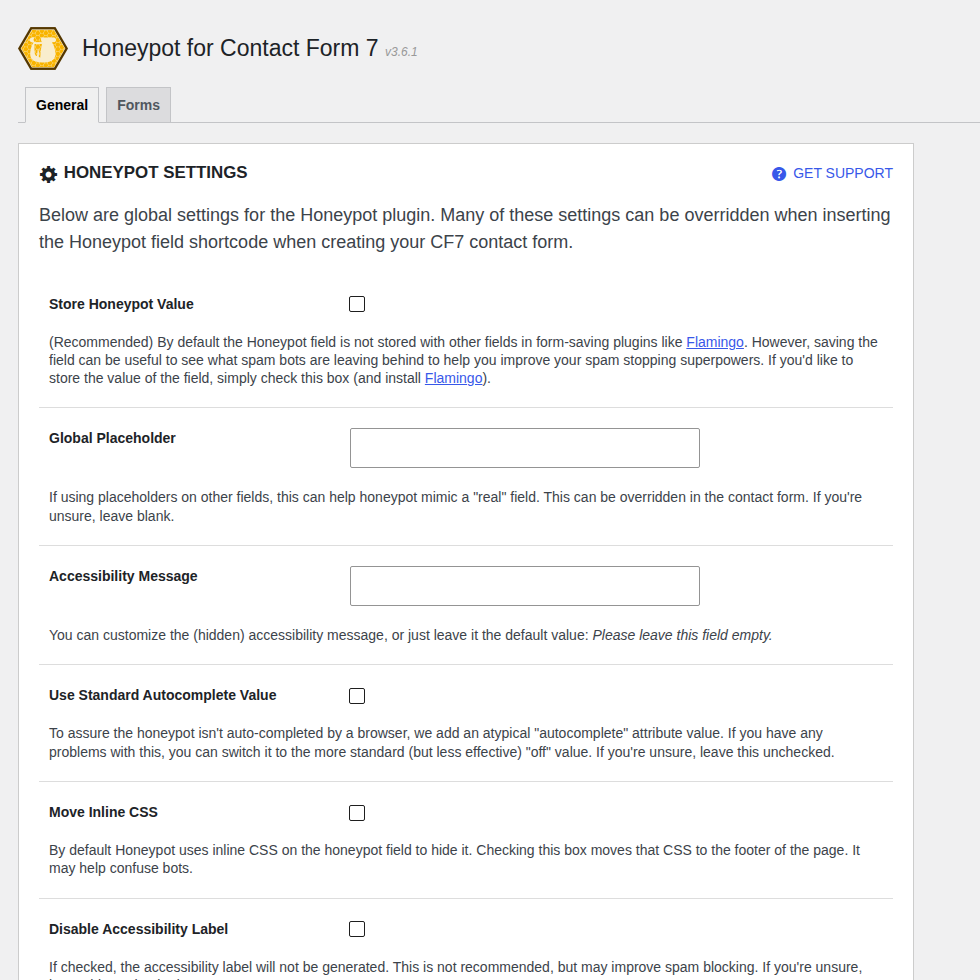
- Add a honeypot field to catch simple bots that fill hidden fields.
- Use minimum submission time to reject forms submitted faster than a real person could type.
- Keep token protection on if your plugin offers it. A token is a form-specific check that makes blind automated submissions harder.
- Send a normal test message after each change.
WPForms, Elementor Forms, Gravity Forms, Fluent Forms, Everest Forms, JetFormBuilder, and similar builders use different menus. The strategy is the same: turn on the low-friction controls first, then add stronger checks only if the spam pattern needs them.
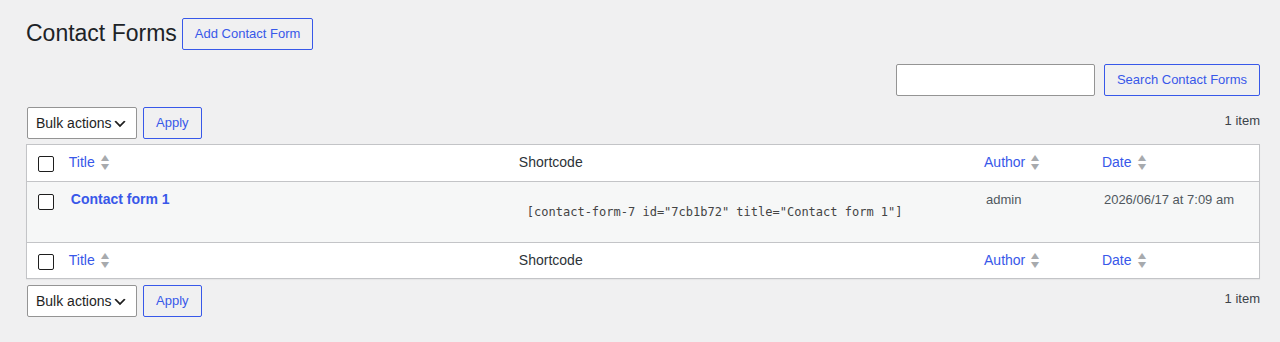
Where this goes wrong: someone enables a honeypot, gets three more spam messages, and assumes the setting failed completely. A honeypot is worth enabling, but it is not a complete spam strategy. It catches the lazy scripts, not every script.
A dedicated honeypot settings screen is useful when you need a low-friction control that does not interrupt real visitors.
Add Akismet, Turnstile, reCAPTCHA, or hCaptcha carefully
If the built-in controls are not enough, add one verification or spam-filtering service that matches the problem.
Akismet checks whether the message looks like spam. It is useful when the content is the problem: fake leads, repeated phrases, suspicious links, or known spam patterns. Cloudflare Turnstile, reCAPTCHA, and hCaptcha check whether the visitor looks legitimate enough to submit the form. Turnstile is often lower friction than older visual CAPTCHA prompts.
The difference matters. A spam filter asks, “Does this message look bad?” A CAPTCHA-style tool asks, “Does this visitor look real?”
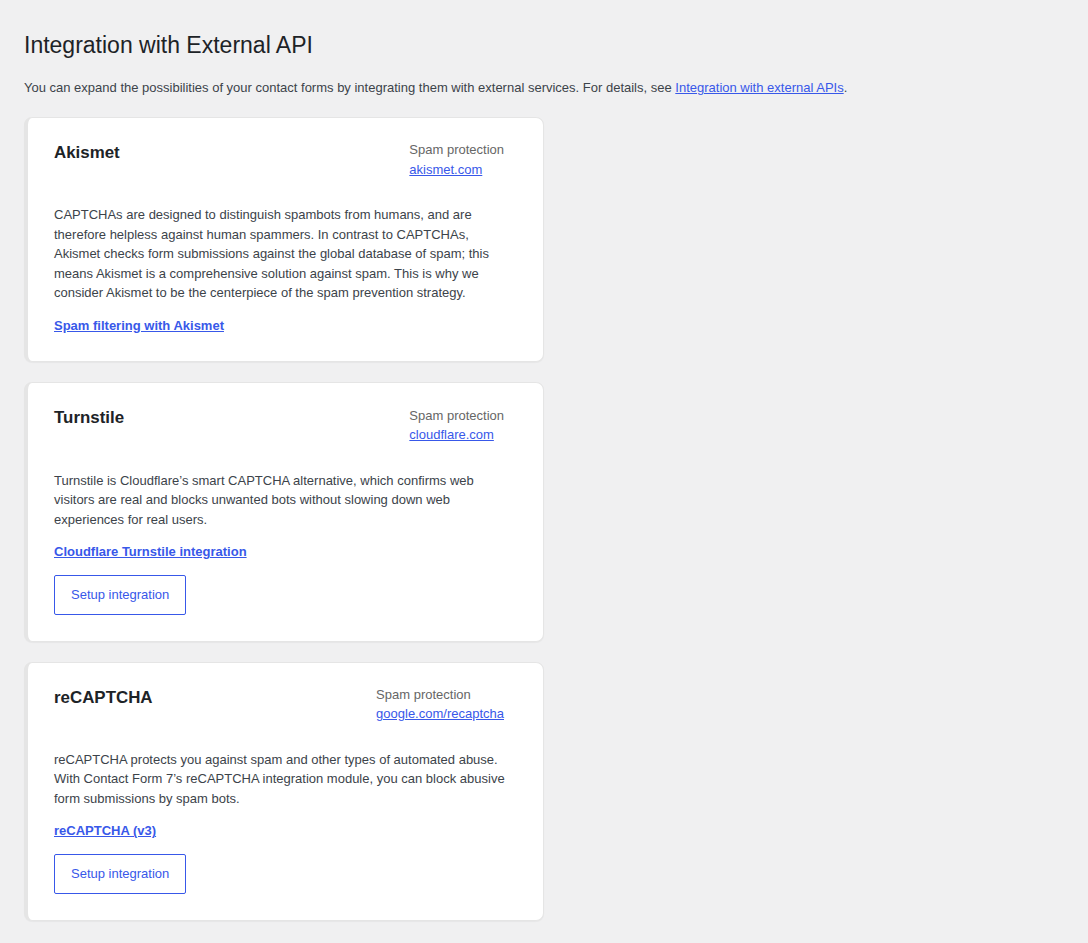
If you are choosing between those two jobs, this Akismet vs reCAPTCHA comparison is the better next read.
If you are comparing spam-filtering services instead of CAPTCHA tools, use a CleanTalk vs Akismet breakdown. Use the spam itself as the clue:
- Use Akismet or another spam-scoring service when the messages contain repeated junk, strange links, or known spam wording.
- Use Turnstile, reCAPTCHA, or hCaptcha when bots are submitting too easily.
- Use both when you have bot-like behavior and spammy content.
- Review privacy and data handling if your site has stricter compliance needs.
For most contact pages, do not start with a hard visual challenge. CAPTCHA is not free; it spends user patience. That matters on mobile, for accessibility, and for any form that feeds sales or support. Do not stack three verification tools on one simple contact form because spam is annoying. More gates can make the form look broken to real people.
Block obvious spam without blocking good leads
Some spam is easy to spot because it repeats the same words, URLs, sender domains, or fake email addresses. That is where targeted blocking helps. Add precise blocks for:
- repeated spam phrases
- obvious promotional links
- disposable email domains
- repeated sender domains
- messages with too many links
- IP addresses that repeat the same pattern
Be specific. Blocking crypto may be safe for a local dentist and risky for a finance consultant. Blocking SEO services may be safe for a bakery and costly for a marketing agency. If real leads sometimes send links, do not block all URLs. Limit the number of links, block known spam domains, or send link-heavy messages to review.
Country and language filters need the same restraint. A local plumber may be able to block countries they never serve. A SaaS company, agency, hotel, ecommerce store, or publisher may not. Blocking a country is easy. Blocking a real customer is expensive.
Use Disallowed Comment Keys only for clear patterns
WordPress has a built-in field called Disallowed Comment Keys under discussion settings. Some form plugins can use this list to block submissions that contain certain words, URLs, email addresses, IP addresses, or domains.
Add one blocked item per line. Use it for a repeated spam domain, a fake email domain, a phrase that appears in every junk message, or a known bad IP address.
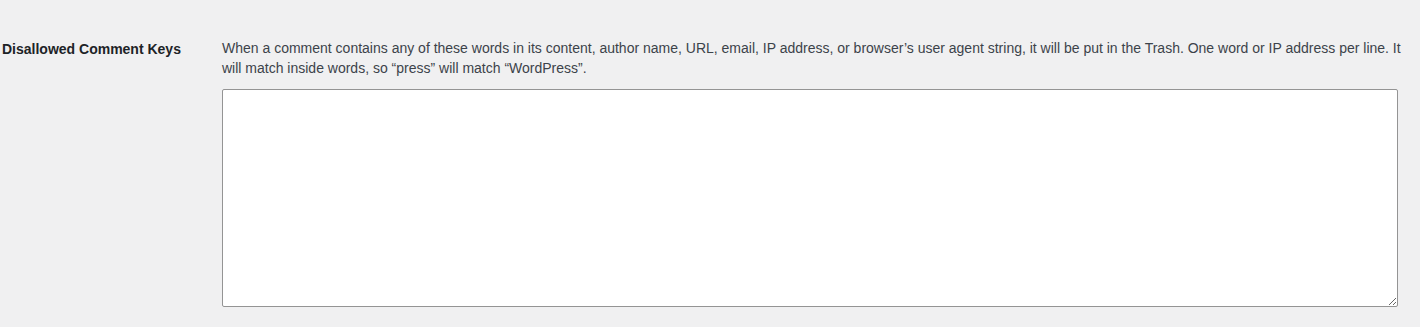
Do not turn this list into a dumping ground. It can affect comments and any plugin that respects the setting, so one broad word can block more than you expect. A good blocked term is specific enough that you would not expect a real lead to use it. A bad blocked term is a normal business word that only feels suspicious because it appeared in one spam message.
Stop Contact Form 7 spam with the CF7 path
Contact Form 7 has its own practical route because its official integrations matter. Do not treat it exactly like every other builder. Use this quick path:
- Connect Akismet for spam-pattern filtering when you want submissions checked against known spam behavior.
- Add Cloudflare Turnstile for visitor checks when bots are submitting forms too easily.
- Use Disallowed Comment Keys for repeated text, URLs, emails, domains, or IPs when the pattern is obvious.
- Add a CF7 anti-spam plugin for timing, honeypot, fingerprinting, DNSBL, or local filtering when basic controls fail. DNSBL means a shared blocklist of known bad senders.
- Install an entry review tool such as Flamingo if you need to inspect submissions and tune rules.
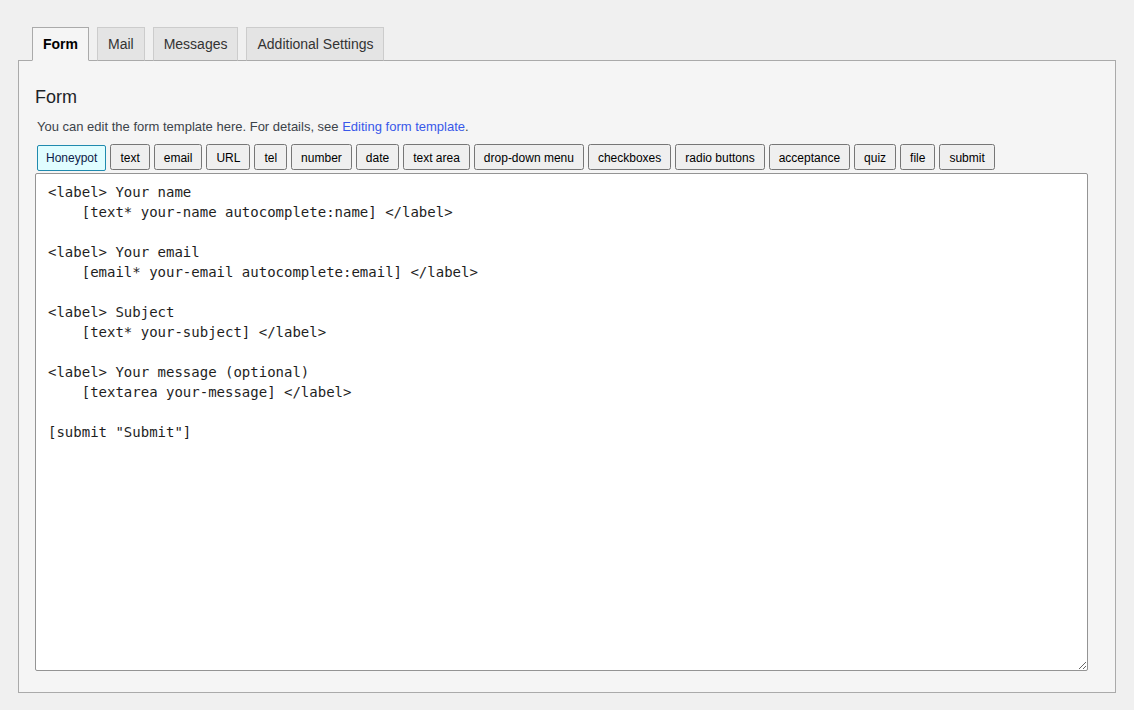
If the spam is instant and repetitive, timing checks and Turnstile make sense. If the message is always the same fake pitch, keyword and URL blocks may do more. Test a normal submission after every CF7 change. The form is fixed only if real people can still use it.
Handle contact form builder spam
If you searched for WordPress contact form builder spam, it is tempting to blame the builder. Sometimes the builder is weak or abandoned. Usually, it is not the first thing to replace. Use this order:
- Turn on the builder’s native spam setting before adding more plugins.
- Add Akismet, Turnstile, reCAPTCHA, or hCaptcha if the builder supports them.
- Block repeated keywords, URLs, emails, or domains when the spam content repeats.
- Use a dedicated anti-spam plugin if your builder’s controls are too thin.
- Move to firewall or bot protection if the same bots hit forms, comments, login, or registration.
Elementor Forms users often start with the honeypot setting and then get frustrated when some spam still slips through. That does not mean Elementor is uniquely broken. It means honeypots catch simple bots, not every bot.
WPForms-style token protection, Gravity Forms add-ons, Fluent Forms settings, Everest Forms waiting-time rules, and similar builder controls all live in different places. Treat the menu labels as implementation details. The real question is whether your setup has timing checks, visitor checks, content checks, and a way to review what was blocked.
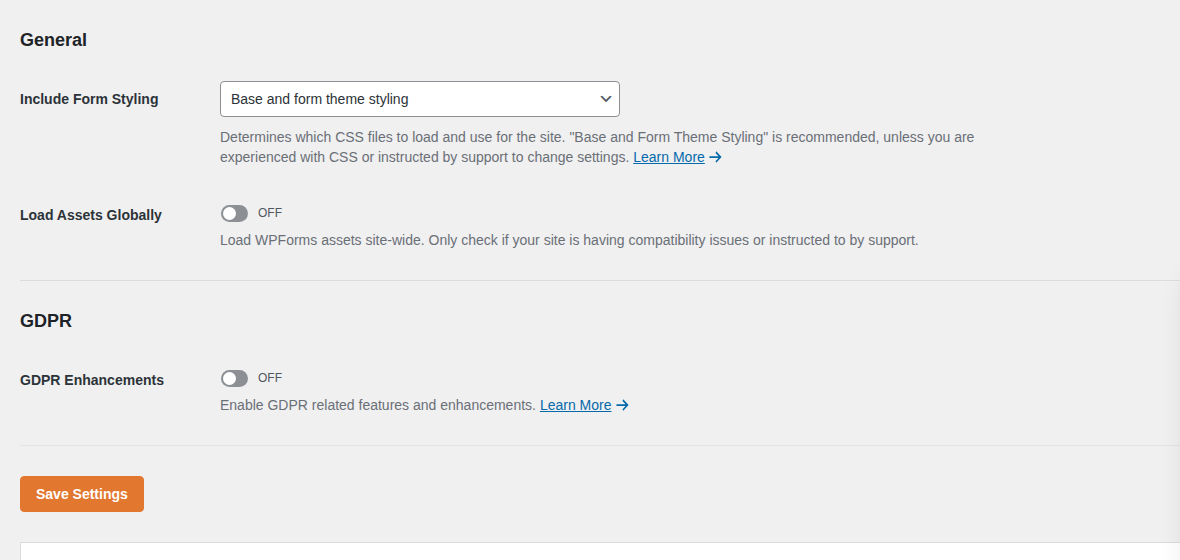
If you are deciding whether to replace the builder, BlogVault’s WPForms vs Contact Form 7 comparison is a useful side read. Switch form builders only if your current one is abandoned, lacks the controls you need, breaks normal submissions, or gives you no way to review spam decisions.
Replacing a form plugin is a project. Turning on the right layer is usually faster.
Move protection upstream when spam is really bot traffic
Form-level controls still let the request reach WordPress. That matters when spam arrives in bursts or hits more than one part of the site. Move upstream when:
- several forms are targeted at once
- comments, login, registration, or checkout are also being hit
- SMTP limits or hosting resources are under pressure
- the same IP ranges or browser signatures keep appearing
- form-level filters work for a while, then fail again
Browser signatures are details a site can read from a visitor’s browser and request. They can help spot repeated automated behavior, but they are not perfect.
This is where a firewall, WAF, rate limiting, or bot protection layer helps. Instead of asking WordPress to judge every bad submission after it arrives, you reduce suspicious traffic before it reaches the form.
MalCare fits this layer when contact form spam is part of broader automated traffic against a WordPress site. Its firewall and WordPress bot protection can reduce malicious requests, while your form settings still handle form-specific spam content.
This is also where the “is my site hacked?” worry needs context. Contact form spam by itself usually means bots found a public form. Escalate the concern if spam appears alongside unknown admin users, malware warnings, suspicious files, login attacks, plugin vulnerability alerts, or sudden server resource spikes.
Check email, entries, and server side effects
Spam is visible in your inbox, but the mess often spreads elsewhere. Check:
- stored form entries
- SMTP logs and email queues
- spam folders
- hosting resource usage
- blocked-entry logs
- security logs
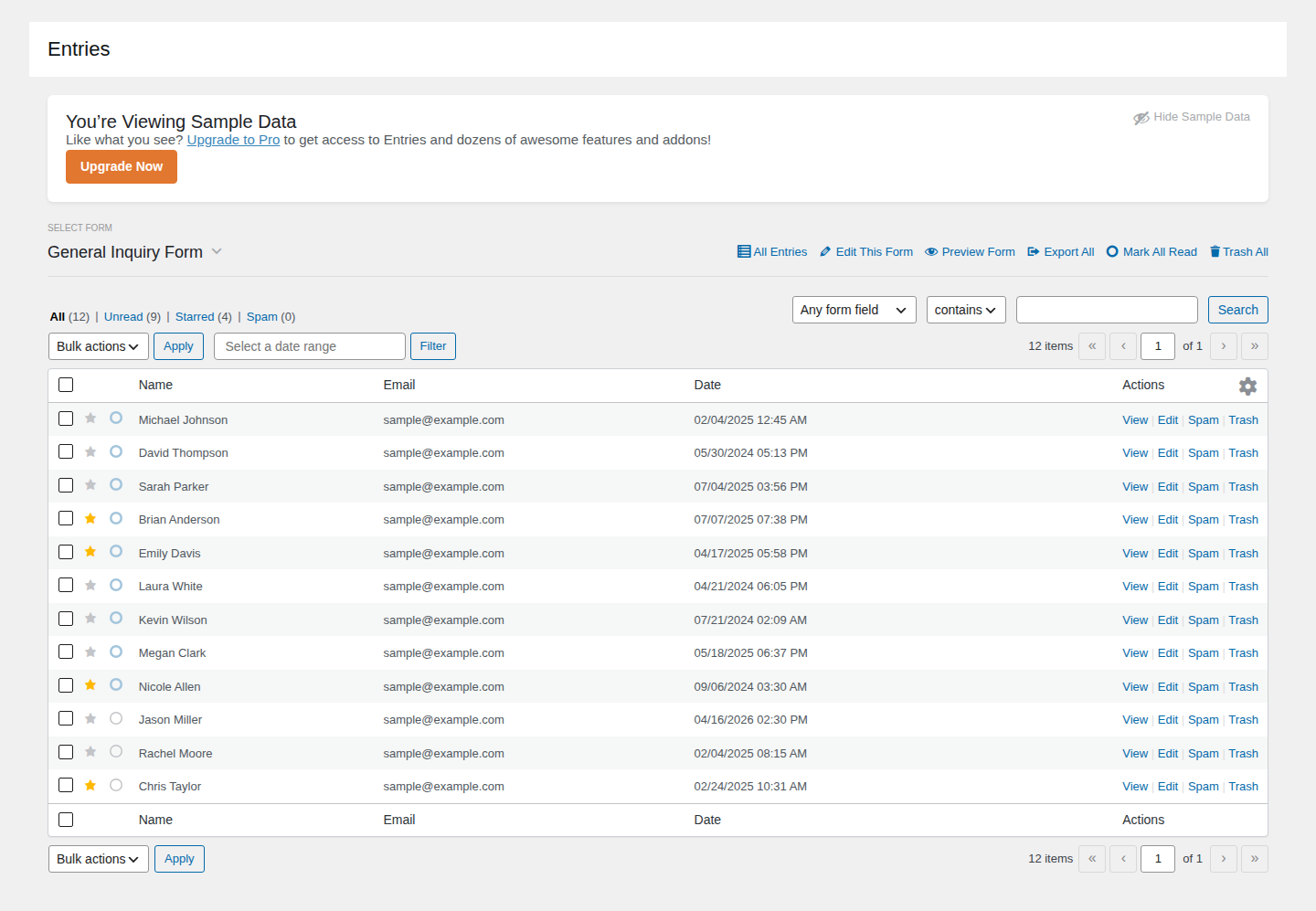
If your SMTP provider has limits, check whether spam used the quota. If real lead emails stopped arriving, confirm whether the form is blocked, the mailer is failing, or messages are landing in spam.
If the site is being flooded, you can temporarily disable the form. Add a safe replacement contact method first, such as a protected email display, business phone number, alternate form, or temporary landing page. Turn the form back on only after you have added protection and tested it.
Test every fix like a real customer
A lower spam count is not enough. You also need to know that good leads still get through.
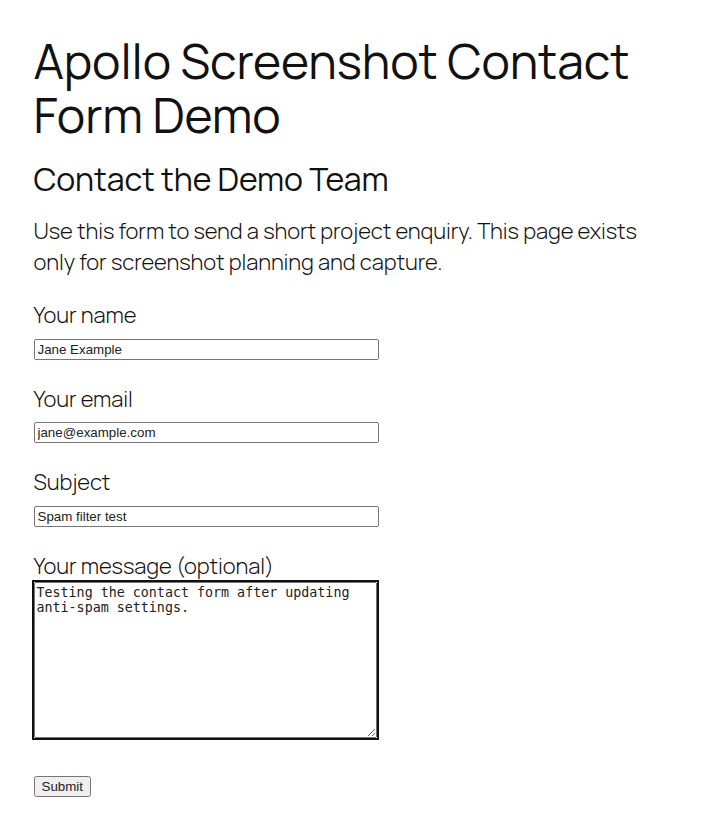
Use this checklist after each meaningful change:
- Submit a normal desktop message and check the confirmation, inbox, and stored entry.
- Submit a normal mobile message because many real leads use phones.
- Test a message with a URL if customers often send links.
- Test expected regions and languages if you enabled country or language filters.
- Check blocked entries for false positives during the first week.
- Review SMTP logs if delivery has been unreliable.
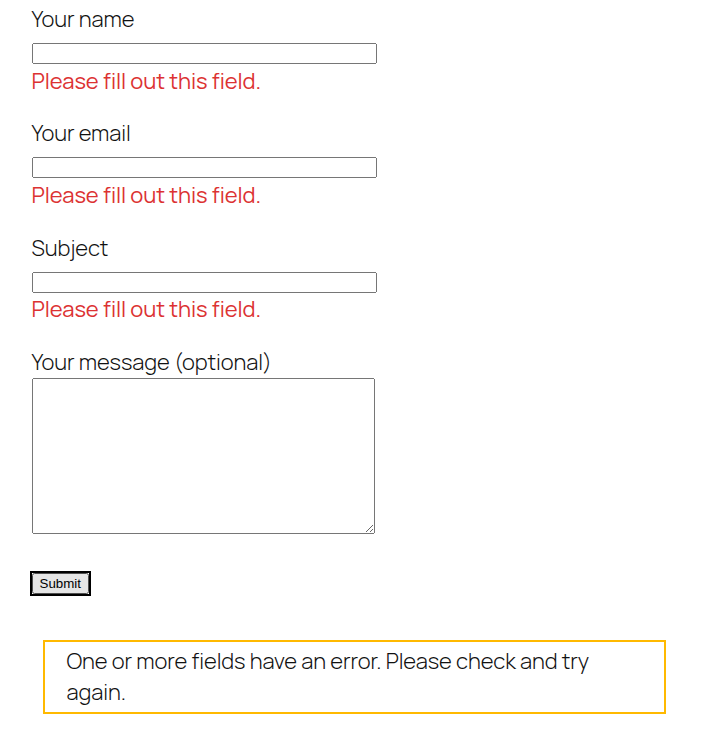
False positives are real messages that your filter blocks by mistake. They are the hidden cost of aggressive spam rules.
Also test the boring edge cases that real people create. Paste a company description. Use a business email with a subdomain. Submit from a phone on mobile data. Send a message with an apostrophe, an accented name, or a URL if those are normal for your audience.
The best setup is quiet in the right way: junk disappears, real leads arrive, and nobody has to babysit the contact form every morning.
Avoid fixes that create a worse problem
Some anti-spam moves look strong but hurt the contact form.
- Do not start with hard visual CAPTCHA unless spam volume justifies the friction.
- Do not block copy and paste because real users paste project details, company names, and URLs.
- Do not force login for a simple contact form because most leads will leave.
- Do not require OTP or email verification for basic enquiries unless the form has a high-risk use case. OTP means a one-time passcode.
- Do not use broad country blocks without business reason because bots can route around them and real customers cannot.
- Do not add custom PHP on a live site without a backup because one typo can break the form.
- Do not rely on IP blocking alone because bots rotate IPs, proxies, and networks.
- Do not hide all errors from users because a real customer needs to know what to fix before trying again.
The wrong fix can make the form quieter because fewer real people can use it. That is not a win.
Keep spam from coming back
No anti-spam setup stays perfect forever. Bots change, plugin settings change, and old landing pages get forgotten. Set a simple routine:
- update WordPress, themes, form plugins, and add-ons
- review spam logs weekly until the problem settles
- remove blocked terms that are too broad
- watch for repeated domains, phrases, and IP patterns
- keep verification keys current
- test forms after major plugin updates
- remove unused forms and pages
Review the rules you created, not just the spam that got through. A blocklist that made sense during a flood can become too strict once the flood is gone. MalCare is useful when the problem has moved beyond one form. Bot protection, firewalling, vulnerability monitoring, and malware scanning help you watch the site around the form, not only the form itself.
FAQs
How do I stop spam from WordPress contact forms?
Start with your form plugin’s built-in spam protection, add a honeypot or minimum submission time, then use Akismet or Turnstile. If spam repeats the same text, URL, sender domain, or fake email pattern, block those exact keywords, URLs, emails, or domains.
How do I stop Contact Form 7 spam?
Use Contact Form 7’s supported path: Akismet, Cloudflare Turnstile, and WordPress Disallowed Comment Keys. If spam continues, add a CF7 anti-spam plugin with timing checks, honeypot checks, or local filtering, then test real submissions.
Why is spam still getting through my honeypot, CAPTCHA, or Turnstile?
A honeypot catches simple bots, not all bots. CAPTCHA and Turnstile check visitor behavior, not message content. Add content filters, Akismet, rate limiting, or site-level bot protection when one layer is not enough.
Is Akismet better than reCAPTCHA for contact form spam?
Akismet and reCAPTCHA solve different parts of the problem. Akismet evaluates whether a message looks like spam. reCAPTCHA evaluates whether the visitor looks automated. Use Akismet for spammy message content, reCAPTCHA or Turnstile for bot-like submissions, and both if the pattern calls for it.
Can contact form spam hurt email deliverability?
Yes. If every spam entry sends an email, spam can use SMTP quota, bury real leads, trigger provider limits, and hurt sender reputation. Stop spam at the form or traffic level instead of relying only on inbox filters.
Conclusion
The best fix for WordPress contact form spam is a clear sequence: update the basics, turn on native form protection, add a low-friction verification or spam filter, block proven spam patterns, and test real submissions. Keep each rule narrow enough that a good lead can still contact you.
If spam keeps coming in waves or shows up across forms, comments, login, and registration, treat it as bot traffic instead of a form setting problem. That is when firewall and bot protection make sense, alongside the form-level controls that keep individual submissions clean.