
Fake orders have a way of showing up in bursts. One morning you’re scrolling through new orders, and a dozen small card payments from strangers sit in a row, all with slightly different names.
We see this pattern often. A store owner notices it, panics for a moment, and then wonders whether the only option is to block everyone. It isn’t. This guide helps you pick the right WooCommerce fraud prevention plugin and roll it out without turning away real customers.
You’ll see which option fits your biggest problem, what each one costs, and how to test blocking before it touches a genuine buyer.
TL;DR: For most stores, start with checkout controls and one plugin in observation mode, then turn on blocking only after you’ve reviewed real attempts.
Turn on your gateway’s AVS and CVV checks, then run one fraud prevention plugin in observation mode for a week. Review flagged orders before enabling blocking, and follow WooCommerce security practices to protect the rest of your store.
Which plugin fits your store?
The best plugin depends on the problem keeping you up at night. Most store owners don’t need every feature. They need the one that fixes their specific headache.
If card testing is the issue, a checkout-focused tool helps most. If you want detailed control over risk levels, a rule-based plugin suits you better. The table below puts the five options side by side, and the sections that follow cover each one in the same order.
| Plugin | Best for | Price (per our review) | Watch out for |
|---|---|---|---|
| FraudLabs Pro for WooCommerce | External risk scoring and a clear dashboard | Free version is limited. Paid plans from about $29 a month | Confirm usage limits and current pricing |
| Anti-Fraud for WooCommerce | Card testing and bot checkouts | Check current pricing and store eligibility | Review default settings before enabling automatic blocking |
| YITH WooCommerce Anti-Fraud | Detailed control over thresholds and risk levels | $99 a year | Overlapping rules can flag good customers |
| Fraud Prevention for WooCommerce by Dotstore | Simple blocklists for emails, IPs, states, and ZIP codes | Free version available. Paid plans from about $129 a year | Registration blocking caused problems in our testing |
| Sensfrx Fraud Prevention for WooCommerce | Fake signups, bot traffic, and AI-based scoring | Check current pricing | Newer option, so review its track record first |
📝 Note: A plugin that blocks fake orders doesn’t stop chargebacks from genuine customers who dispute a payment. Keep your gateway’s dispute tools and your refund policy in place alongside any plugin.
FraudLabs Pro for WooCommerce for external risk scoring
FraudLabs Pro is a strong starting point for many stores, mainly because it checks orders outside your own site. It looks at geolocation (where the buyer appears to be connecting from), proxy use (whether they’re hiding behind a relay server), email, card, and blacklist data. Each transaction then gets a risk level in an external dashboard.

Setup is straightforward. You connect the plugin with an API key from the service, then review and act on results from the dashboard. Its recent updates added enhanced settings, clearer fraud results, and an option to reject WooCommerce failed orders.
The free version is limited, and paid plans start at about $29 a month in our review. Confirm current pricing and usage limits, and check that your order volume fits within them before you commit.
📝 Note: External screening sends order details to a third-party service. Check how that service handles customer data before you connect your store.
Anti-Fraud for WooCommerce for card testing
If your logs show bursts of tiny payments, Anti-Fraud for WooCommerce is worth a close look. It’s the official extension from WooCommerce’s own documentation, and it’s built for that pattern.
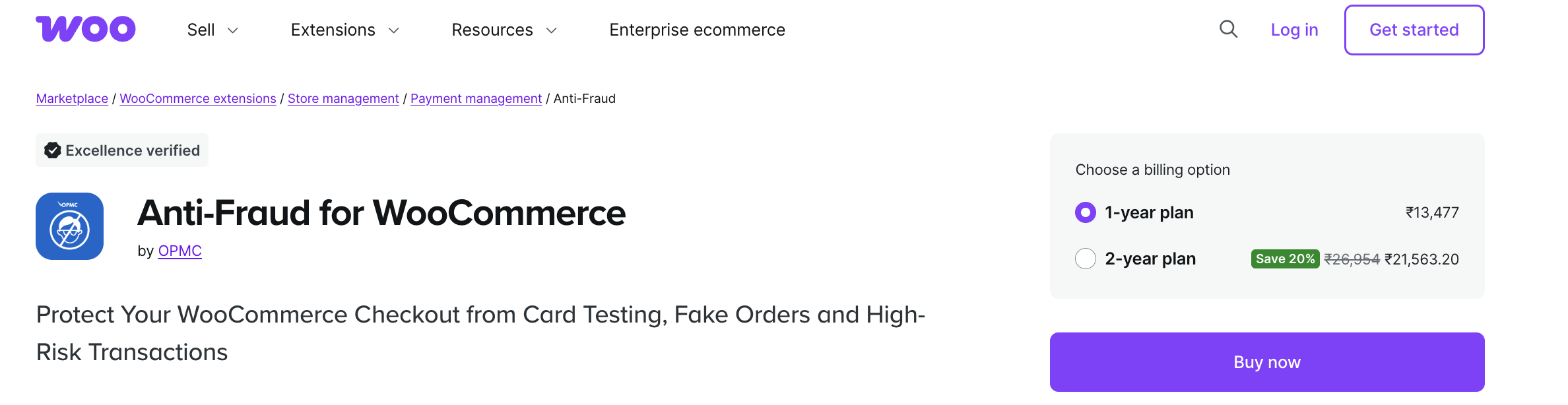
WooCommerce card testing attacks happen when fraudsters run many small payments with stolen card numbers to see which ones still work. We’ve seen stores lose hours to this before they notice anything wrong. The extension offers fraud rules, risk thresholds (the score at which an order gets flagged), pre-payment checks, and card testing protection.
You’ll find its settings under WooCommerce > Settings > Anti-Fraud. Start with the default settings, and review the main protection options before you turn on automatic blocking.
It also includes Checkout CAPTCHA with Cloudflare Turnstile. That’s a verification tool that slows bots without asking real shoppers to solve puzzles, which keeps the checkout friendly for your customers. Check current pricing and whether your store qualifies, since plan details can change.
📝 Note: Set up a simple alert for a spike in failed payments. That way you hear about a burst of attempts while it’s still happening, not a week later.
YITH WooCommerce Anti-Fraud for detailed control
Some merchants want to tune every threshold, and that’s a fair instinct. YITH WooCommerce Anti-Fraud gives you that control.
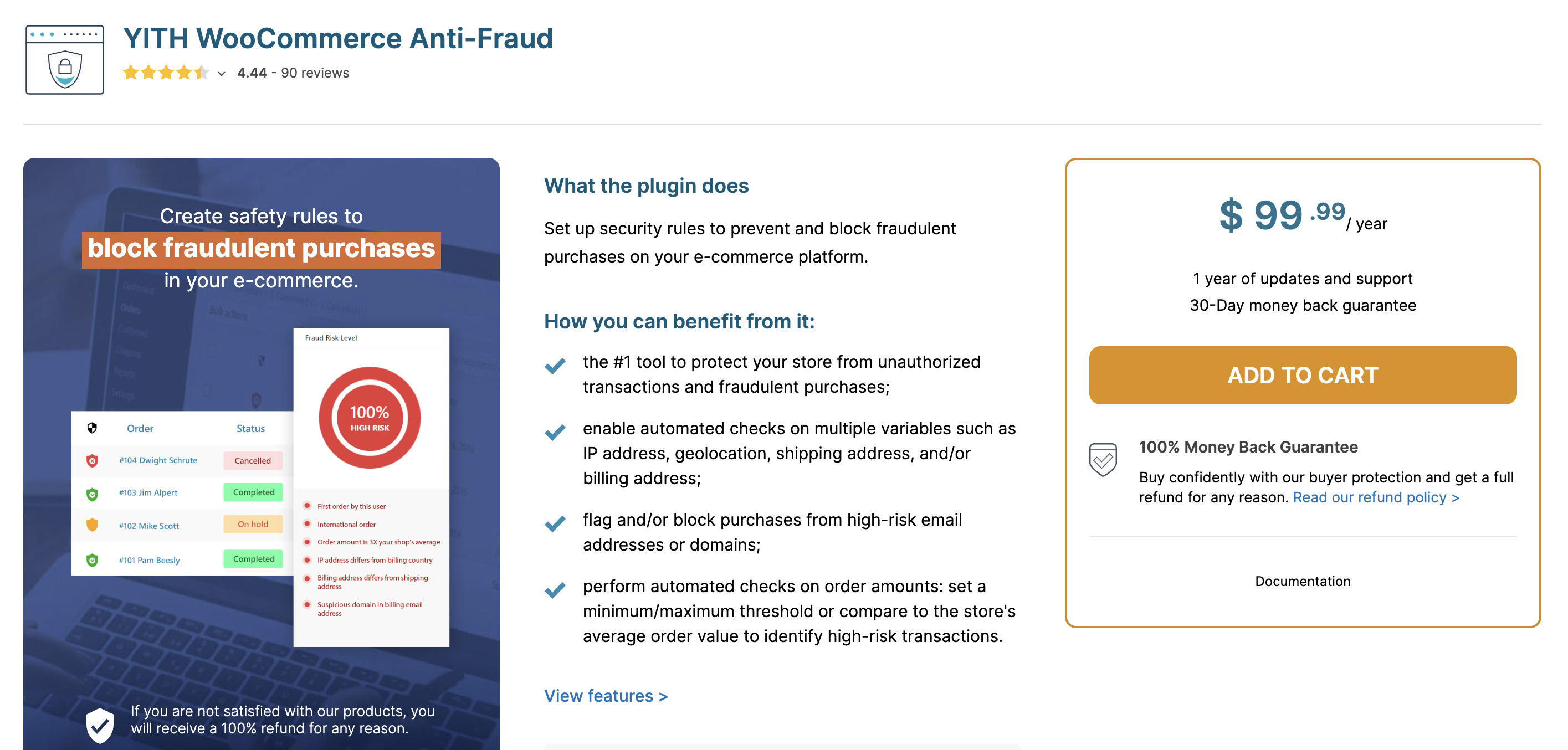
It sorts orders into low, medium, and high risk, and you can adjust the rules behind each level. It also checks the first order, geolocation, and billing and shipping addresses, and it flags proxy use. It can even cancel high-risk orders automatically.
That power is useful, but it deserves caution. In our review, it costs $99 a year. Overlapping rules can flag good customers, so test every change before you rely on it.
📝 Note: Automatic cancellation is the setting most likely to cost you a real sale. Turn it on last, and only after a few weeks of reviewing what the plugin flagged.
Fraud Prevention for WooCommerce by Dotstore for simple blocklists
Small stores often just want to block the troublemakers they’ve already seen. Nothing wrong with that. Fraud Prevention for WooCommerce by Dotstore covers that job well.
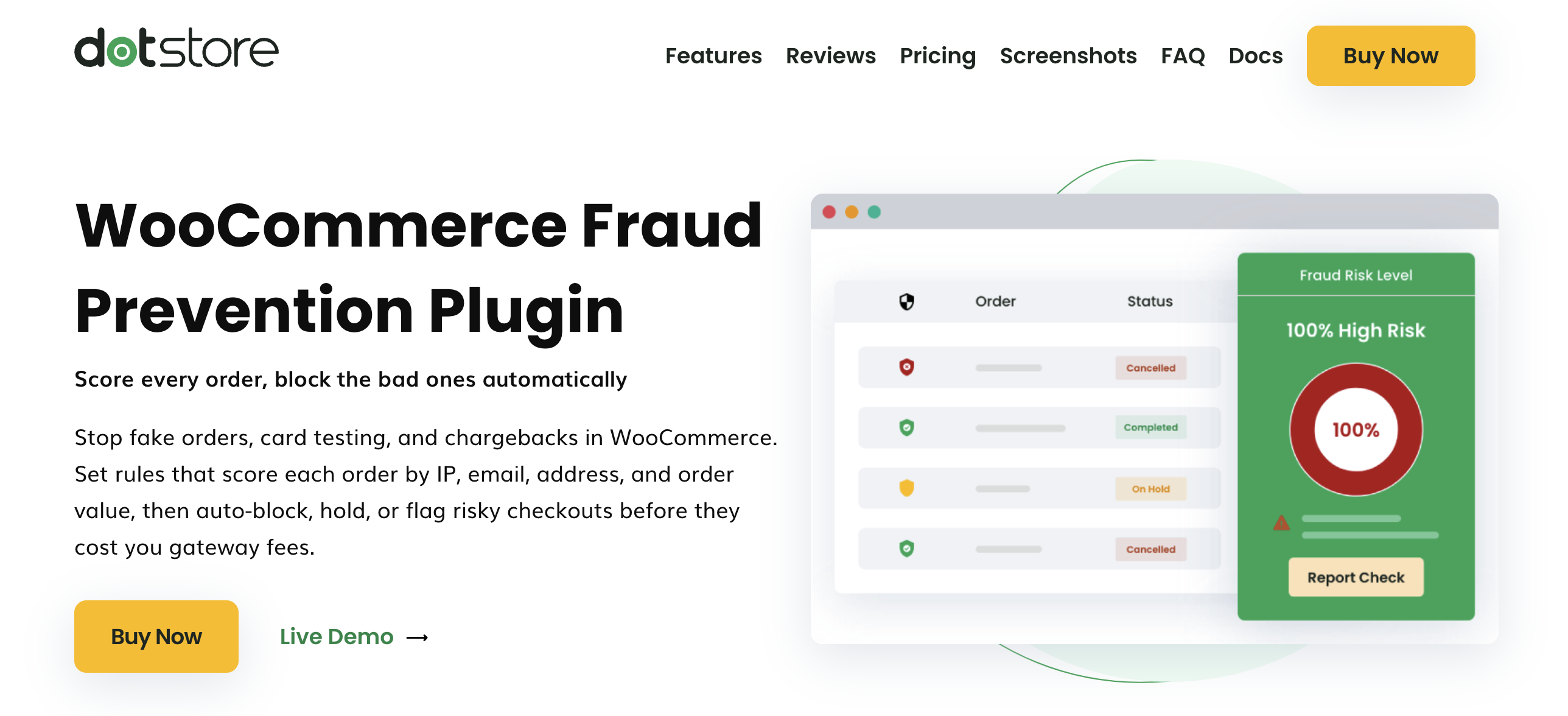
Its free version lets you blocklist email addresses, domains, IP addresses (the numeric address of a device on the internet), states, and ZIP codes. You can choose whether to stop a customer at registration or at checkout.If you need to block specific WooCommerce customers, choose rules that target the repeated abuse without excluding legitimate buyers.
Be realistic about what a blocklist can do. Attackers change email addresses and IP addresses easily, so static rules catch only part of the problem. In our testing, checkout blocking worked well, but registration blocking caused problems. Test both before you trust them. Paid plans start at about $129 a year.
📝 Note: Before you block a state or ZIP code, check your order history. A rule that looks sensible can shut out a whole area of real customers.
Sensfrx Fraud Prevention for WooCommerce for AI-based protection
If fake signups and bot traffic are part of your story, Sensfrx Fraud Prevention for WooCommerce covers more ground than checkout. It protects sign-up, login, checkout, and post-payment review.
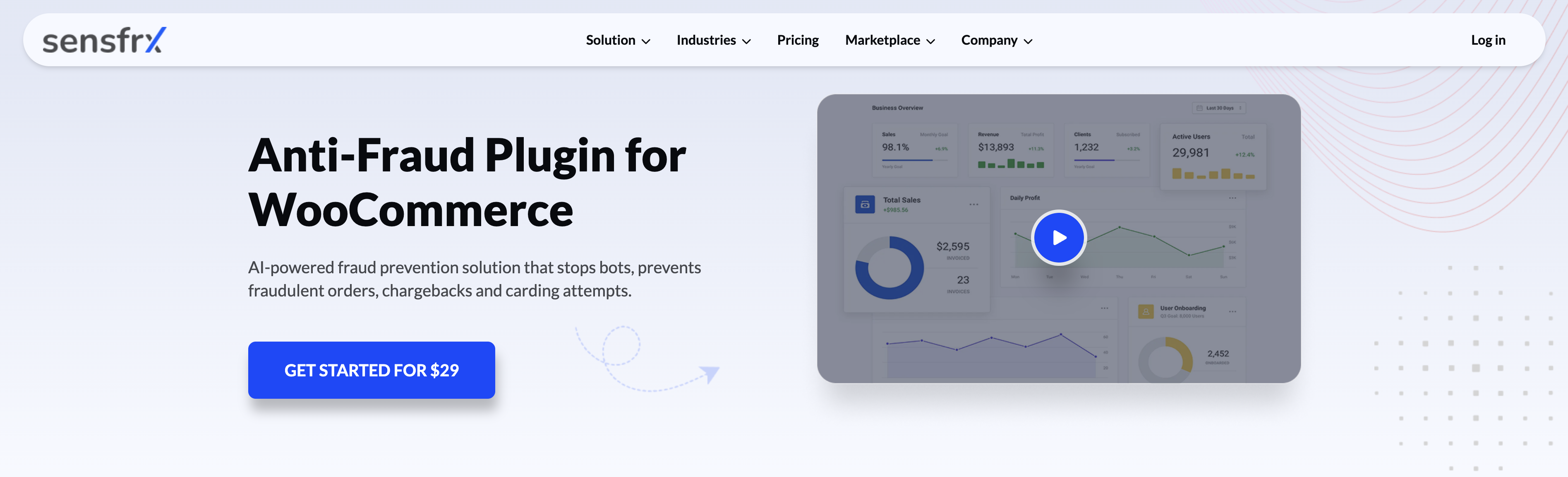
It uses AI-driven risk scoring that adapts as fraud patterns change. Its listing says it requires WooCommerce 8.0 or higher.
The most useful feature for a cautious start is shadow mode. Sensfrx watches fraud signals without enforcing blocks, so you can see what it would have stopped before it touches a real order. It’s also newer than the other options, so review its pricing, data handling, and track record before you commit.
📝 Note: Shadow mode is the safest way to start with any AI-based tool. Let it observe for a week, then compare its flags with your real orders before you turn on blocking.
How to roll out protection without losing good customers
Start with observation, and turn on blocking one rule at a time. We’ve seen a single strict setting cost stores real sales before the owner noticed the damage.
Begin with your payment gateway. Turn on AVS, which compares the billing address with the card issuer’s records. Turn on CVV, which checks the security code printed on the card. Enable 3D Secure, which asks the buyer to confirm their identity with their bank, where your gateway supports it. Then set limits on failed payments and transaction amounts.
Then run one plugin in observation mode. Give it at least a week, and log what it flags and why. Compare those flags with your real orders, and look for patterns that catch genuine customers. Place a test order with a known-safe account to confirm your checkout still works from start to finish.
Keep a way back for real buyers. Hold suspicious orders instead of cancelling them. Create an exact-match allow rule for a verified customer rather than loosening every threshold. One strange order shouldn’t change the rules for everyone.
📝 Note: Card testers often move from one IP address to another, so blocking a single address can stop one attempt while the rest continue. Look for patterns across many attempts instead of single identifiers.
Protect the rest of your site too
A fraud plugin looks at transactions. For protection beyond checkout, follow these WooCommerce security practices to secure your store’s files, extensions, and administrator accounts.
Malware is malicious code hidden in your files. WooCommerce security issues such as vulnerable extensions and compromised accounts need protection beyond transaction screening.Our security plugin covers that ground with a firewall, bot protection, a malware scanner, and login protection.
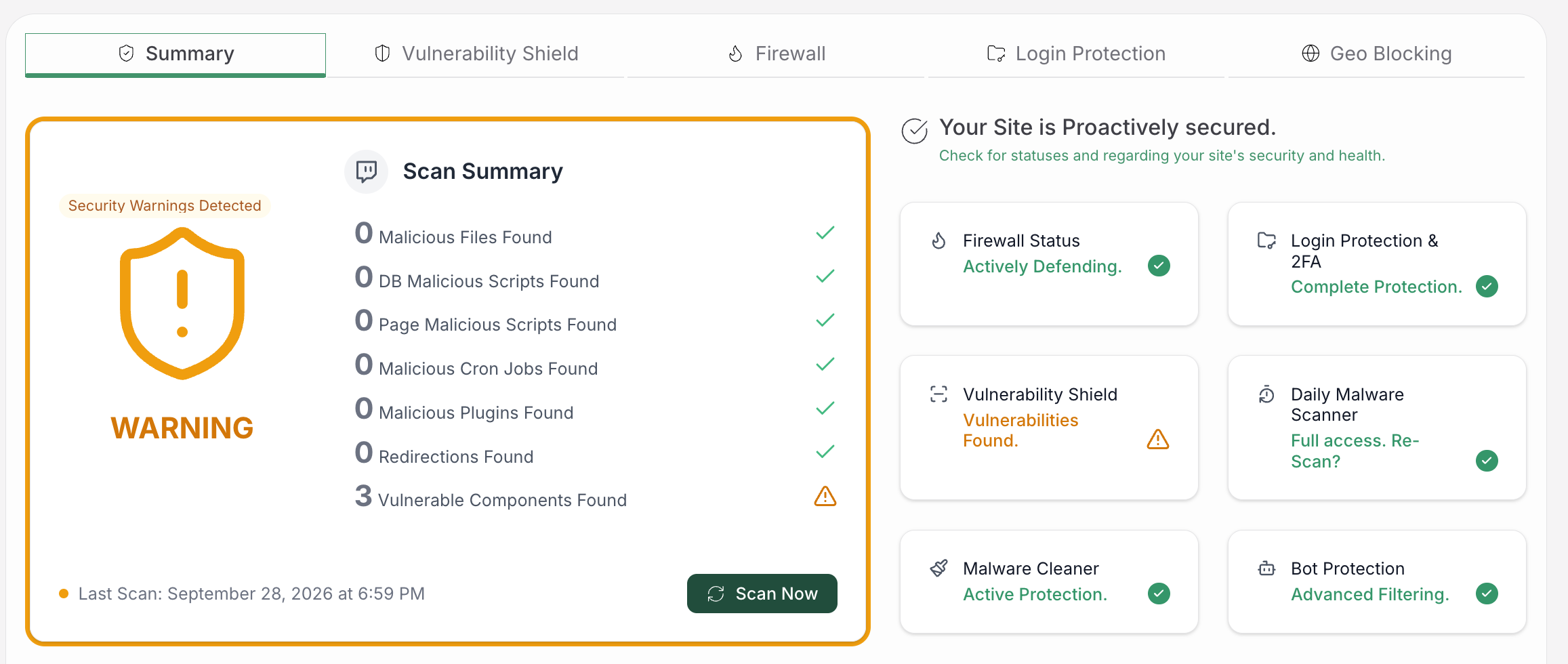
Add two-factor authentication for every admin and store manager. It requires a code from your phone in addition to a password. Put CAPTCHA, a check that tells humans from bots, on checkout, registration, and login pages. If you spot redirects to unfamiliar sites, spam pages you didn’t create, or admin accounts you don’t recognise, check whether your website has been hacked. Investigate it separately from order fraud, because the fix is different.
📝 Note: Fraud screening answers whether an order looks risky. Site security answers whether WordPress shows signs of compromise, so check those signals separately.
FAQs
What is the best WooCommerce fraud prevention plugin?
There isn’t one best plugin for every store. FraudLabs Pro suits external scoring, Anti-Fraud for WooCommerce suits checkout and card testing, YITH suits detailed rule control, Dotstore suits simple blocklists, and Sensfrx suits AI-based protection across signups and checkout.
Is there a free WooCommerce fraud prevention plugin?
Yes, FraudLabs Pro and Fraud Prevention for WooCommerce by Dotstore both offer free versions with limits. Check each listing for current features and plan boundaries before you rely on them.
How do I stop fake orders without blocking real customers?
Turn on gateway checks like AVS and CVV, observe flagged orders for a week, and hold suspicious orders for review. Use exact-match allow rules for verified customers instead of lowering every threshold.
Do fraud plugins stop chargebacks?
No, they can reduce suspicious orders, but chargebacks come from disputes that happen after payment. Use your gateway’s dispute tools and a clear refund policy to handle them.
Should I use a fraud plugin or a security plugin?
Use both, since they solve different problems. A fraud plugin reviews transactions, while a security plugin protects your site from malware, malicious traffic, and suspicious logins.
Conclusion
Start with gateway checks and one plugin in observation mode, then turn on blocking one rule at a time. Review a week of flagged orders, keep a route open so genuine customers can still buy, and add site security alongside your fraud tools.
Most stores that handle this well don’t find one perfect plugin. They find a small setup they understand and can explain to their team. Give yourself a week, a test order, and a note of every change you make.Once your fraud rules are working, run a WordPress security audit to check for vulnerabilities and account risks that transaction screening doesn’t cover.